Why Weapon Upgrades Matter
Weapon upgrades can turn a dependable gun into a late-run tool, but they cannot fix a weapon’s fundamental weaknesses. In Quasimorph, upgrading is most valuable when it improves a gun you already use safely and consistently.
Damage is always available as an upgrade, yet a higher damage number does not add a scope, silence shots, improve reload behavior, or change an awkward firing mode. Before spending scarce materials, judge the whole weapon rather than its damage alone.
Most unlocks come from chips acquired through faction trading, rewards, or fortunate finds. Chips can reveal weapons, armor, utility items, ammunition, and other gear, so using them solely for upgrades can delay access to stronger equipment.
| Weapon trait | Can upgrades improve it? | Why it matters |
|---|---|---|
| Damage | Yes | Raises lethality and helps a weapon remain relevant longer. |
| Accuracy | Yes | Makes shots more dependable, especially outside ideal range. |
| Spread | Yes | Important for automatic weapons and burst fire. |
| Magazine capacity | Yes | Reduces dangerous reload interruptions. |
| Reload speed | Yes | Helps when fighting at close range or under pressure. |
| Scope, laser, suppressor, firing mode | No | These are built-in weapon characteristics. |
Unlock First, Upgrade Second
The safest early approach is to prioritize unlocking gear. A common or high-tech chip may reveal an exceptional weapon that changes your loadout entirely, while spending it on a small stat increase only improves gear you already have.
Engineering upgrades should come before serious weapon investment. Project-cost reductions are especially valuable because weapon projects can consume a surprising amount of material over time. A higher project-level limit can also matter for weapons with enough potential to justify a deeper upgrade path.
Use this order when your resources are limited:
- Improve Engineering cost reductions first.
- Use chips to unlock new equipment whenever possible.
- Test newly unlocked weapons in actual missions.
- Upgrade only the weapons that solve a specific combat problem.
- Keep some materials in reserve for armor, medical supplies, and replacement loadouts.
| Upgrade priority | Best use | Reason |
|---|---|---|
| Engineering cost reduction | Early and mid game | Lowers the long-term price of many future projects. |
| Equipment unlocks | Nearly always | May provide a direct upgrade over current gear. |
| Damage upgrades | Proven favorite weapons | Gives reliable value without changing handling. |
| Accuracy and spread | Automatic or long-range guns | Prevents wasted shots and dangerous misses. |
| Magazine and reload upgrades | Weapons used in extended fights | Reduces exposure during reloads. |
A low-tier gun can be upgraded into something that deals respectable damage, but it still retains its low-tier handling and limitations. This is the central trap of upgrading: a heavily improved weak platform can cost more than simply finding and using a naturally superior weapon.
Build Around a Weapon’s Strengths
A practical target for a weapon you intend to keep is roughly ten damage upgrades, followed by selective handling improvements. This usually provides enough extra power to make the weapon useful without committing every available chip and crafting component.
Do not apply the same template to every gun. A precise pistol with a collimator sight may need damage and magazine improvements far more than accuracy. An automatic weapon may demand reduced spread before extra damage feels worthwhile.
| Weapon type | Strong upgrade focus | Common limitation that upgrades cannot solve |
|---|---|---|
| Pistols | Damage, magazine size, condition | Short range or slow individual reloads |
| SMGs | Damage, accuracy, spread, magazine size | Ammo consumption and limited penetration |
| Rifles | Damage, accuracy, reload speed | Built-in fire mode and attachment set |
| Sniper rifles | Damage, accuracy, condition | Single-round loading on some models |
| Heavy weapons | Damage, accuracy, capacity | Weight, ammunition cost, and handling |
For automatic weapons, accuracy and spread work together. Extra damage means little if bursts miss at the range where you need to fight. A modest spread reduction can make a weapon far more consistent, particularly when enemies are close enough for multiple projectiles to connect.
Magazine capacity is usually a quality-of-life upgrade, but it becomes a survival upgrade when reloads are slow. A weapon with individual-round loading can leave you exposed for several turns. No amount of damage investment changes that reload system.

When an Upgrade Is Worth the Cost
Upgrade a gun when it has a clear role that other available weapons do not fill. Heavy-ammunition weapons are often stronger candidates because their baseline damage and specialized features can justify extending their lifespan.
A weapon is also a good candidate when it has useful built-in attachments. A laser-equipped gun can provide highly reliable hits, while a suppressor can help keep encounters from escalating. A sight can make a weapon much more practical beyond its nominal range. Those advantages remain valuable after damage upgrades.
Consider investing when the weapon has:
- A firing mode you deliberately use, such as a strong burst or multi-shot option.
- Attachments that improve accuracy, stealth, or effective engagement distance.
- Enough magazine capacity to survive a sustained encounter.
- A damage type or penetration profile suited to enemies you expect to face.
- Ammunition you can consistently acquire and carry.
Avoid investing deeply when a weapon is merely available. Basic guns often work well as disposable tools, especially if their maximum project level is limited. Saving materials for a better platform is usually the better long-term decision.
High-tier weapons can support many upgrades, but that does not automatically make them efficient. Their projects become expensive, and late-game equipment may already kill ordinary targets without extensive enhancement. Reserve major investment for weapons that address difficult enemies, armored threats, or a playstyle you rely on every mission.
Combat Factors Upgrades Do Not Replace
Upgrades improve your firearm, not your positioning. Armor weight, evasion penalties, enemy range, ammunition type, and status effects can matter as much as your weapon’s listed damage.
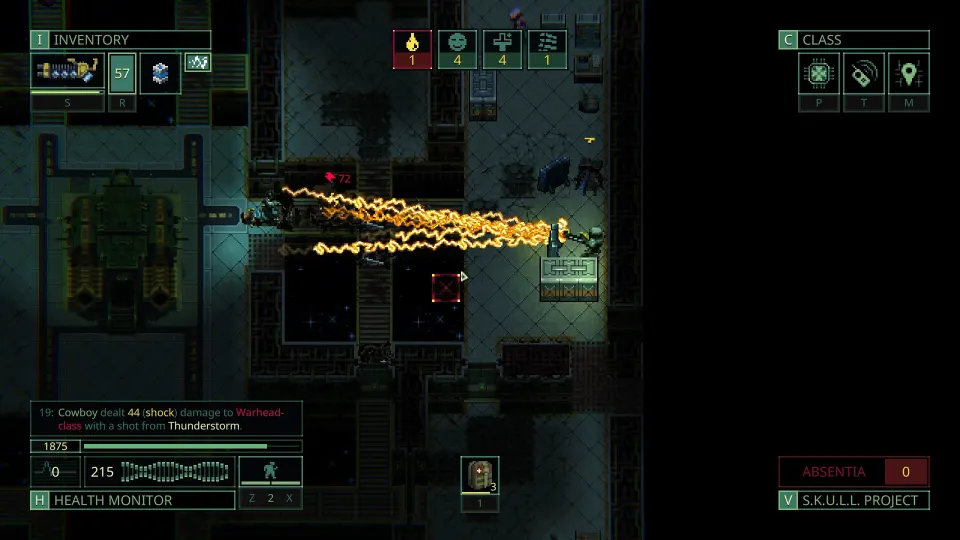
Heavy armor may reduce evasion enough that enemy bursts, shotguns, and rapid-fire shock weapons become extremely dangerous. In those situations, a better gun helps, but avoiding close-range exposure is often more important than another damage level.
| Threat or condition | Why it is dangerous | Helpful response |
|---|---|---|
| Low evasion from heavy gear | Enemies land more shots, including full bursts | Balance protection with mobility and avoid open approaches. |
| Shotguns and multi-shot weapons | Several pellets or rounds can connect at once | Maintain distance and use cover or doorways carefully. |
| Laser-equipped enemies | Their shots are highly reliable | Break line of sight instead of trusting evasion alone. |
| Armor-piercing or corrosive weapons | Resistance may not fully protect your gear | End fights quickly and avoid prolonged exchanges. |
| Elemental and radiation damage | Can apply harmful buildup beyond direct wounds | Carry appropriate treatment and avoid repeated hits. |
Damage falloff also changes how you should evaluate a weapon. An enemy beyond effective range may seem harmless, then become lethal after moving a few tiles closer. A scoped or accurate weapon can help control that approach, but it cannot remove the danger of a close enemy with a powerful burst weapon.
Treat durability as part of your weapon plan. A powerful gun in poor condition is not a dependable primary weapon. If maintenance costs are competing with upgrades, prioritize keeping the weapon functional before pursuing marginal stat gains.
FAQ
Is quasimorph upgrading weapons worth it?
Quasimorph upgrading weapons is worth it for a small number of proven weapons, especially guns with strong attachments, useful firing modes, or heavy ammunition. It is usually less efficient to heavily upgrade basic weapons when better equipment can still be unlocked.
What should I upgrade first?
Start with damage on a weapon you already trust. Around ten damage levels is a practical goal for a long-term gun, then add accuracy, spread reduction, magazine capacity, or reload speed based on its weaknesses.
Should I spend chips on upgrades or unlocks?
Favor unlocks first. Chips can reveal rare weapons and other valuable gear, and an unlock may be a larger improvement than several upgrade levels. Spend chips on upgrades only after you have a dependable equipment pool.
Can upgrades add a scope, suppressor, or laser?
No. Upgrades improve numerical weapon stats, but attachments and core behavior are fixed. A low-tier gun upgraded for damage still keeps its original reload style, attachments, and firing modes.