Why Play a Melee Build?
A strong melee build turns close-range combat into a controlled advantage rather than a desperate gamble. Eclipse Blades is Quasimorph’s dedicated starting class for this style, with perks that improve accuracy, dodging, mobility, recovery, and damage after a melee kill.
The tradeoff is simple: range is still safer. A melee clone must create favorable engagements through positioning, terrain, and a backup weapon. When enemies can surround you or fire from open ground, charging straight in is usually the wrong call.
This build works best for players who want to clear rooms aggressively, harvest enemies efficiently, and capitalize on momentum after the first kill. It is especially useful when farming bosses or moving through lightly armored early- and mid-game opponents.
| Build strength | Why it matters | Main risk |
|---|---|---|
| High close-range damage | Melee kills can activate powerful damage bonuses | You must enter enemy attack range |
| Flexible weapon choices | Damage type can match enemy resistances | One weapon will not solve every fight |
| Strong mobility | Running provides extra actions for hit-and-retreat plays | Open spaces limit safe approaches |
| Resource sustain | Human meat can restore calories and support melee bonuses | Raising Quasimorphosis can create danger |
Core Eclipse Blades Perks
Eclipse Blades naturally improves while you play in close quarters. Its perks do not require complicated side objectives: attack with melee weapons, dodge attacks, run, survive hits, and secure melee kills.
The most important perk is Carnage. After you kill an enemy with a melee weapon, it increases all damage dealt by the clone. That includes damage from a firearm switched to after the kill, making a ranged backup much more valuable than it first appears.
| Perk | How it improves | Practical use |
|---|---|---|
| Knife Fight | Gain experience by making melee attacks | Raises melee accuracy, helping reliable attacks at close range |
| Reflexes | Gain experience by dodging attacks | Improves dodge chance when enemies retaliate |
| Athletics | Gain experience while using Run movement | Reduces the accuracy drawback from running |
| Taste of Blood | Gains value when you are hit and bleeding | Provides health regeneration over time |
| Carnage | Triggered by a melee kill | Greatly boosts all clone damage after the kill |
| Cannibalism | Triggered by eating human meat | Increases melee damage and supports calorie management |
Knife Fight is your consistency perk. Missed melee attacks are costly because they leave you beside the target, so accuracy is often more valuable than chasing small damage upgrades. Any melee weapon helps level it, meaning you can adapt weapons without abandoning progression.
Reflexes matters because close combat exposes you to repeated attacks. Dodge is not a replacement for armor or cover, but it reduces the number of bad outcomes when a room becomes crowded. Let it build naturally instead of taking risks just to be hit.
Athletics is what makes the class feel unusually mobile. Run movement gives three actions per turn, and the perk softens the normal accuracy penalty. That action economy lets you move into range, attack, and retreat behind cover during the same turn.
Taste of Blood is helpful but should never define your plan. Bleeding-based regeneration can stabilize a damaged clone, yet deliberately taking wounds is a poor bargain. Treat it as insurance while you prioritize bandages, armor, and safe positioning.
Weapons, Damage Types, and Loadout
Do not build around a single melee weapon forever. Enemy resistance determines whether cutting, blunt, piercing, fire, or shock damage is effective, so carrying alternatives is more dependable than relying on the highest listed damage number.
Cutting weapons have an additional practical benefit: they can amputate limbs. This can make harvesting human meat easier, which pairs directly with Cannibalism. Blunt weapons provide a useful alternative when a target resists cutting damage.
| Weapon approach | Damage focus | Best use |
|---|---|---|
| Basic knife or early melee tool | Varies | Start leveling Knife Fight immediately |
| Halberd axe | Strong cutting damage | Early to mid-game clearing against less-armored targets |
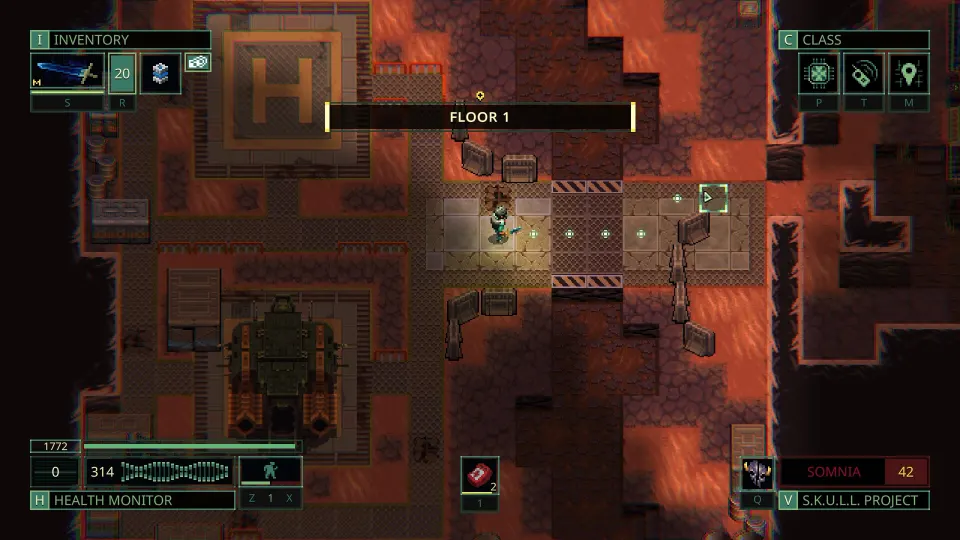
| Lunar Blade | Cutting damage | A stronger upgrade obtained from Quasimorph encounters |
| Lunar Club or morningstar-style weapon | Blunt damage | Covers targets that resist cut damage |
| Shotgun with buckshot | Ranged cutting damage | Emergency option when closing distance is unsafe |
A practical loadout contains one primary melee weapon, one melee weapon with a different damage type when available, and a firearm. A shotgun is a particularly good fallback because it can solve fights where a doorway is blocked, a target is too dangerous to approach, or several enemies have line of sight.
Prioritize survivability over carrying every piece of loot. Heavy inventories increase calorie demands, and melee clones already spend more actions maneuvering around threats. Bring food, healing supplies, and enough ammunition for the moments when the build must stop being melee-focused.
Use human meat with intent. Raw human meat provides substantial calories, while cooked meat provides more. Both can activate the Cannibalism melee bonus, but eating it raises Quasimorphosis. That can be useful for deliberately reaching a Baron-spawning phase after clearing an area, but it also changes the threat level.

How to Fight Safely at Close Range
The safest quasimorph melee build does not sprint into unexplored rooms. It uses obstacles to break line of sight, force enemies into narrow paths, and prevent multiple opponents from attacking at once.
Doorways are the classic tool. Open a door, step out of sight, switch to Run movement, then enter only far enough to attack. If the target survives, return behind the wall. Repeating this pattern lets enemies approach one at a time instead of firing freely across an open room.
| Situation | Melee response | Avoid |
|---|---|---|
| Enemy behind a closed door | Open it, break line of sight, and lure them out | Standing in the doorway |
| Enemy in open ground | Use pillars, walls, or corners to approach | Running directly through gunfire |
| Several enemies nearby | Funnel them through a choke point | Trading attacks in the middle of a room |
| Dangerous Quasimorph | Use your firearm or retreat if needed | Treating every target as a melee duel |
| Successful melee kill | Exploit Carnage with melee or firearm damage | Wasting the damage window on unnecessary movement |
Follow this engagement routine:
- Scout routes toward doors, pillars, and other physical cover before committing.
- Use Run when you need the extra actions to enter, strike, and withdraw.
- Make the first melee kill safely, then use Carnage’s damage boost to finish the fight.
- Switch to your ranged weapon when distance, explosives, or multiple firing lanes make melee unsafe.
- Watch health, bleeding, calories, carry weight, and Quasimorphosis before descending further.
Pillars and map objects work like doorways when used correctly. Circle around them so the enemy must spend actions moving into range, then attack when you have the better position. This is slower than rushing, but it prevents the most common melee failure: reaching an enemy only to discover several more opponents can shoot you.
Boss farming can benefit from Cannibalism because human meat both feeds the clone and increases Quasimorphosis. After clearing a level, a player can raise the level deliberately and prepare for a Baron encounter. Do this only when your inventory, healing, weapon durability, and escape route are ready.
FAQ
Is Eclipse Blades the best quasimorph melee build class?
It is the clearest dedicated melee choice because every major perk supports close combat, running, survival, or damage after a melee kill. It is powerful, but not universally safe.
Which melee damage type should I use?
Use the type that best matches the target’s resistance. Cutting weapons are useful for limb removal and harvesting, while blunt weapons provide important coverage against enemies that resist cuts.
Should I use only melee weapons?
No. Carry a firearm, ideally something effective at short range such as a shotgun. Carnage can boost its damage after a melee kill, and a backup gun prevents avoidable deaths.
Why is Run movement important?
Run gives three actions per turn. With Athletics, its accuracy penalty becomes less punishing, enabling a move-attack-retreat pattern around doors and cover.
Is eating human meat always worth it?
It can provide calories and a melee damage benefit, but it raises Quasimorphosis. Use it as a deliberate resource and boss-farming tool, not as something to consume without considering the next threat.