Choosing the Right Weapon
A strong weapon in Quasimorph is not always the one with the biggest displayed damage number. Damage type, reload behavior, accuracy, range, and enemy resistance can matter more than tier alone. This Quasimorph all weapons guide helps you choose practical tools for each run instead of spending scarce resources on gear that only looks impressive.
There is no single perfect loadout. A close-range specialist may want a cutting melee weapon and a shotgun, while a cautious ranged build benefits more from a reliable firearm with good accuracy and magazine reloads. Keep at least two damage options when possible, especially before entering areas with unfamiliar enemies.
| Weapon role | Best use | Main strength | Main risk |
|---|---|---|---|
| Melee weapons | Tight rooms and conserving ammunition | Flexible damage types and no ammo cost | Requires dangerous close positioning |
| Pistols | Backup weapon or accurate sidearm | Compact and often precise | Lower sustained damage |
| SMGs | Short-range automatic fire | High volume of fire | Spread wastes ammunition at distance |
| Shotguns | Close defense and emergency stopping power | Strong nearby damage | Weak performance at long range |
| Rifles and sniper rifles | Open sight lines and deliberate shots | Range and accuracy | Reload style can leave you exposed |
| Heavy weapons | Hard targets and late-game pressure | High damage potential | Expensive ammunition and upgrades |
Before committing to a weapon, inspect how it actually operates. A sniper rifle that accepts a full magazine can be easier to use under pressure than one that must be loaded one round at a time. Likewise, a modest gun with a sight, laser, suppressor, or manageable recoil can outperform a nominally stronger alternative.
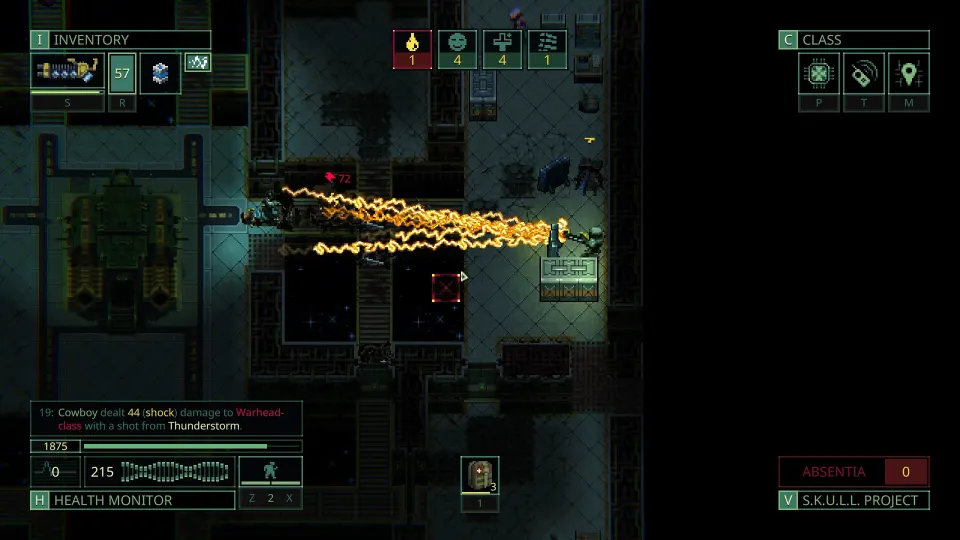
Damage Types, Melee Weapons, and Range
Enemy resistance is the first reason to carry more than one weapon type. A melee weapon is not simply a fallback for when ammunition runs dry; it can be the best answer to a target whose defenses resist your usual bullets. Blunt and cutting options give a melee-focused clone important flexibility.
Cutting weapons can amputate limbs. That makes them useful for obtaining human meat and can improve loot opportunities. However, cutting damage is not universally best, so a blunt weapon remains valuable when an enemy’s defenses make cutting less effective.
| Melee option | Damage approach | Notable use | Loadout pairing |
|---|---|---|---|
| Halberd Axe | Cutting | Strong early-to-mid-game option from Tezctlan | Carry a ranged backup |
| Lunar Blade | Cutting | Strong melee target to farm from Quasimorphs on Earth’s moons | Pair with blunt or shotgun damage |
| Lunar Club | Blunt | Covers enemies less vulnerable to cutting attacks | Works well beside a cutting shotgun |
| Duggur’s Morningstar | Blunt | Alternative blunt tool for flexibility | Useful for mixed-resistance missions |
Range remains one of the safest advantages in Quasimorph. Use cover, doorways, pillars, and corners to control when enemies can attack. Melee users should not sprint blindly into every room; make opponents approach through a narrow path, strike, then retreat behind cover when needed.
A ranged backup is especially important for melee builds. Shotguns loaded with default 12-gauge buckshot can be excellent when closing distance would be fatal. Since buckshot deals cutting damage, pairing it with a blunt melee weapon creates a more adaptable kit.
Use these rules when choosing an encounter weapon:
- Favor the damage type that the target is least likely to resist.
- Use melee when terrain forces enemies through a doorway or around an obstacle.
- Switch to a firearm when several enemies can shoot before you reach them.
- Do not treat weapon tier as a substitute for accuracy, reload speed, or positioning.
- Check ammunition, weapon condition, and cover before starting a fight.
Upgrades, Unlocks, and Worthwhile Investments
Weapons are commonly unlocked through chips, including basic, common, and high-tech item chips. These rewards are random: a chip may unlock armor, utility items, ammunition, or a weapon rather than the exact item you want. Faction-specific chips, trades, and mission rewards can also provide useful unlocks.
Because unlock opportunities can be rare, spending chips to expand your available equipment is usually safer than using them immediately for upgrades. A chip spent improving one weapon may delay an important weapon, armor, or ammunition unlock.
Upgrade engineering before committing heavily to weapon projects. Engineering reductions to project costs make later investment less punishing. Increasing the maximum project level can matter because a low-tier item with a limited upgrade ceiling may never become an efficient long-term choice.
| Upgrade priority | Why it matters | Practical target |
|---|---|---|
| Engineering project-cost reductions | Lowers the cost of future weapon work | Take these before major weapon projects |
| Weapon damage | Raises core output | About 10 damage levels is a useful benchmark |
| Accuracy | Helps shots land consistently | Add a level when accuracy is weak |
| Spread control | Important for automatic weapons | Add a level for rapid-fire guns |
| Magazine size or reload improvements | Improves uptime during fights | Choose based on reload weakness |
| Durability or weight | Situational quality-of-life value | Invest only when it solves a problem |
A fully upgraded low-tier weapon does not automatically become equal to a naturally higher-tier weapon. It can retain weaknesses such as poor accuracy, awkward reloads, limited attachments, or an unfavorable firing mode. Upgrade when the base weapon already has a role you value.
Heavy-ammunition weapons are often the clearest upgrade candidates because their higher damage can scale into difficult encounters. Even then, consider the ammunition cost and whether the weapon has enough accuracy and handling to deliver its damage safely.
For most guns, a balanced upgrade path works better than chasing maximum damage alone:
- Invest around 10 levels in damage if the gun has strong underlying stats.
- Add accuracy so the added damage actually connects.
- Reduce spread for automatic fire if missed rounds are becoming a problem.
- Improve magazine size, reload speed, or durability according to the weapon’s largest limitation.
- Stop when resources are better used for unlocks or a stronger platform.

Notable Weapon Picks and Loadout Logic
Certain weapons stand out because their built-in features support a clear role. The Galan Ultim is a notable pistol because high damage is paired with a collimator sight, suppressor, and laser. Those features make it more dependable beyond typical pistol range and allow quieter, more accurate shots.
The Redeemer is another sidearm worth considering when you need precision and penetration. Its single-round reload is a real drawback, so do not use it as if it were a rapid-response automatic weapon. Treat it like an improvised marksman weapon: fire from safety, preserve distance, and reload before you are trapped.
| Weapon | Why it stands out | Important limitation | Best use |
|---|---|---|---|
| Galan Ultim | High damage with sight, suppressor, and laser | Limited pistol capacity | Accurate stealthy sidearm |
| Redeemer | Damage, penetration, and laser support | Individual-round reload | Deliberate long-range shots |
| Hydra | Can deliver heavy damage in four-shot mode | Lower base damage needs upgrades | Burst-focused pistol play |
| Halberd Axe | Strong cutting melee performance | Requires close engagement | Early-to-mid-game melee |
| Lunar Club | Blunt damage diversifies a melee build | Requires specific farming | Resistance coverage |
The Hydra becomes more attractive if you use its second firing mode, which releases four rounds together. That mode can create meaningful burst damage, but it also demands disciplined ammunition use and good shot selection.
For Eclipse Blades clones, weapon selection connects directly to class perks. Melee attacks level Knife Fight, while dodging improves Reflexes and running supports Athletics. Carnage activates after a melee kill and increases all damage dealt by the clone, including damage from a switched secondary firearm. A melee kill followed by shotgun fire can be powerful when a fight escalates.
Cannibalism also rewards access to human meat by boosting melee damage. Raw human meat restores calories, cooked human meat restores more, and consuming it raises Quasimorphosis. This can reach the Rapture phase and provoke a Baron spawn for farming, but it also means food choices affect mission danger.
FAQ
What does “quasimorph all weapons” mean for a new player?
It is best understood as a comparison of weapon roles rather than a checklist of every item. Start with a ranged weapon, a backup damage type, and a melee tool if your build can use one safely.
Are weapons worth upgrading in Quasimorph?
Yes, but only selectively. Upgrade weapons with useful base traits, especially heavy-ammunition options or dependable special guns. Unlocking new equipment with chips is usually more valuable early on.
Which stats should I upgrade first?
Damage is the usual first priority, with roughly 10 levels providing a practical goal. Then improve accuracy, spread for automatic weapons, and either magazine capacity, reload speed, or durability based on the gun’s weakness.
Is melee viable against Quasimorphs?
Melee is viable when you manage distance, use cover, and bring a ranged backup. Carry both cutting and blunt damage when possible, because enemy resistances can make one type much more effective than another.