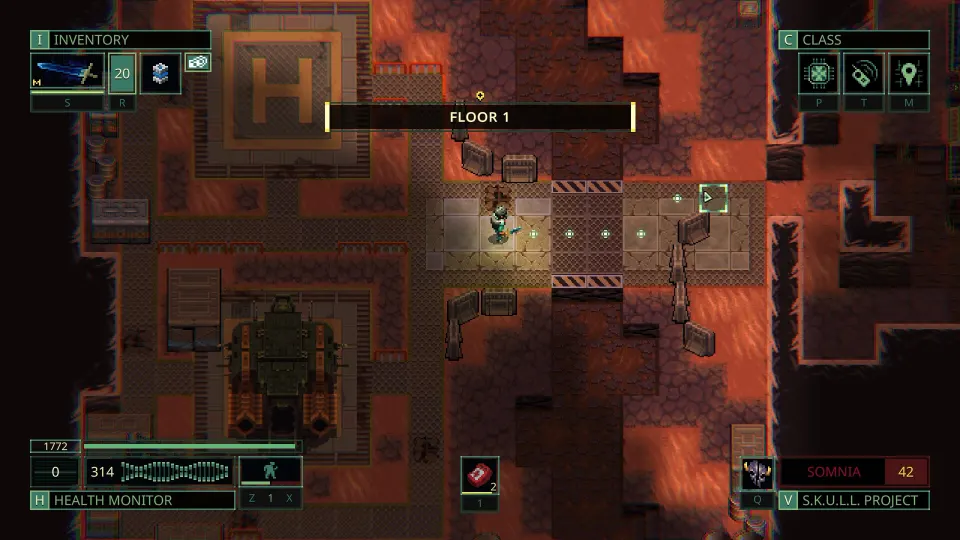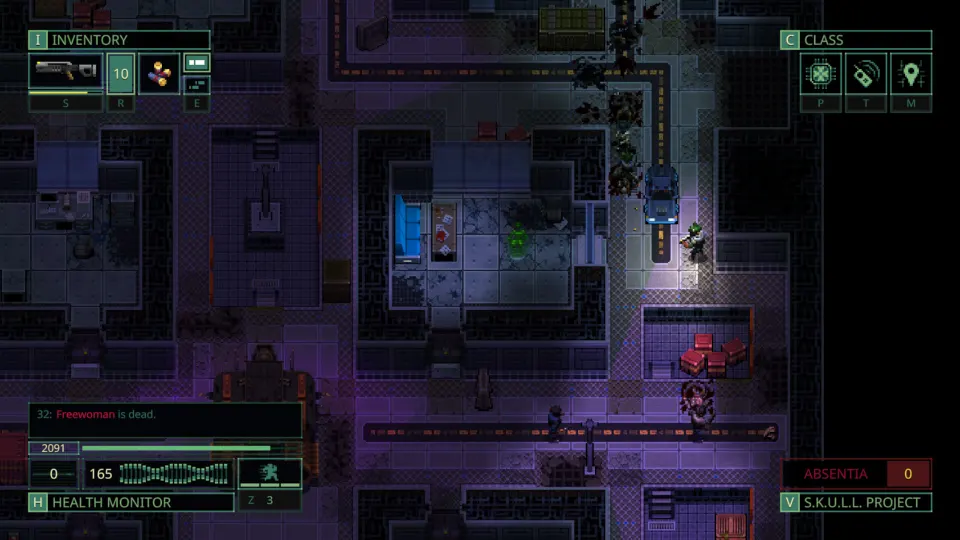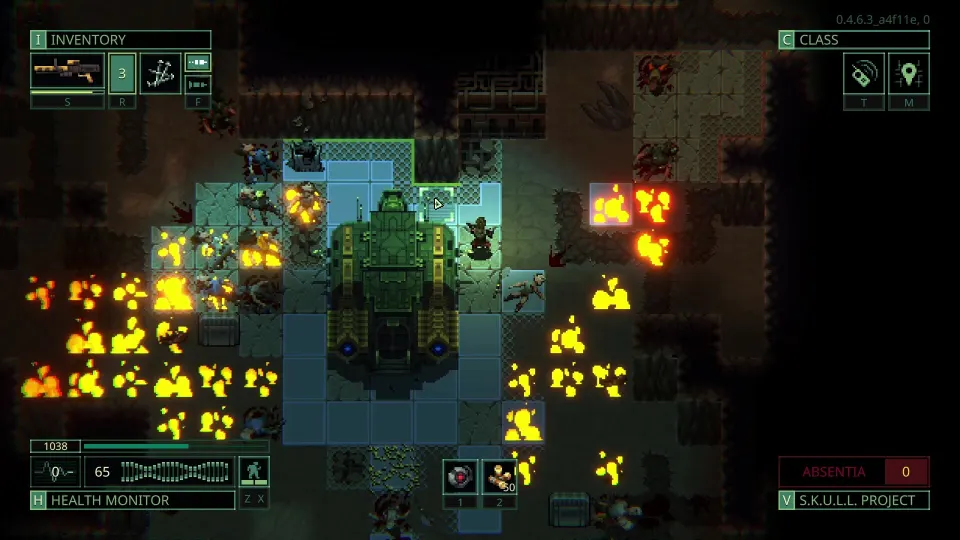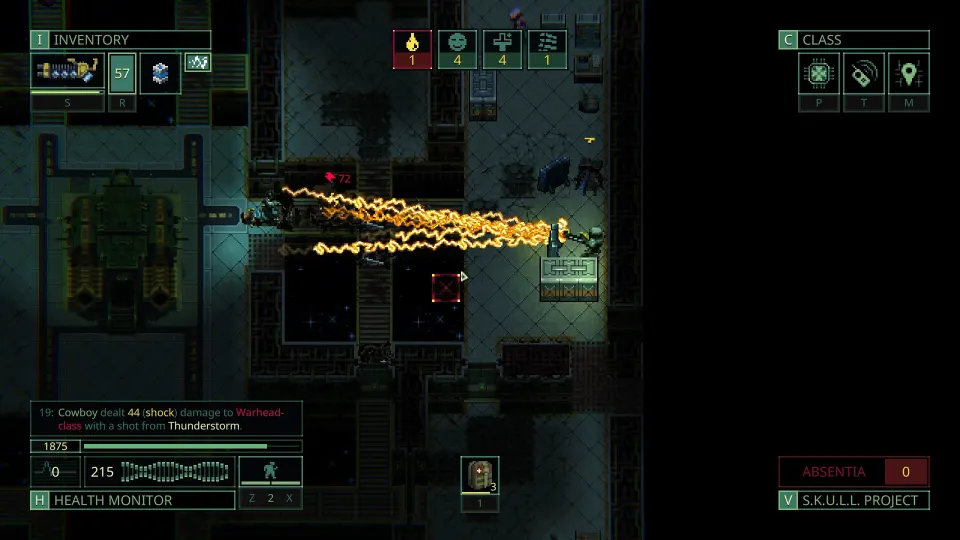
Build Around Survival Before Damage
The best operator build completes its contract and gets home with its gear. In Quasimorph, a powerful weapon or rare implant cannot rescue a loadout that lacks ammunition, treatment, resistance, or an escape plan.
Start with the operator's personal perk, then select a class whose triggers naturally occur during your intended playstyle. A firearm specialist should gain value while shooting and reloading; a melee operator needs mobility, dodge, and safe ways to close distance.
| Build layer | What it decides | Practical question |
|---|---|---|
| Operator | Base stats and personal perk | What is this clone already good at? |
| Class | Passive bonuses and triggered effects | Will its perks activate during normal play? |
| Weapons and armor | Damage type, protection, range, and upkeep | Can this loadout defeat current enemies sustainably? |
| Implants | Specialized advantages with trade-offs | Is the benefit worth the slot and drawback? |
A dependable loadout includes a primary firearm, ammunition for a prolonged fight, healing supplies, mission-appropriate armor, and a second damage option. Do not rely on one weapon type if the next target may resist it.
Before deploying, identify the likely failure condition:
- Getting overwhelmed while entering rooms
- Running out of ammunition or action points
- Taking wounds without enough medical supplies
- Carrying too much loot to move or dodge safely
- Meeting armor your primary weapon cannot defeat
- Losing an irreplaceable clone or implant setup
Treat extraction as part of the build. A loadout that wins one room but cannot retreat safely is incomplete.
Operator Roles and Starting Directions
Operators have different health, accuracy, dodge, pain tolerance, carrying capacity, and personal perks. Early in a campaign, lean into each clone's natural strength instead of forcing everyone into the same role.
| Operator | Personal strength | Good role | Build direction |
|---|---|---|---|
| Percy “Paladin” Fawcett | Broad resistance and melee damage from carried weight | Durable generalist | Armor, dependable firearm, controlled carry weight |
| Isabella “She-Wolf” Capet | Ignores infections and gains damage while injured | Aggressive survivor | Melee backup, treatment, mobility, close-range control |
| Jacques “Cowboy” Kennet | Reloads cost only one AP | Reload-intensive gunfighter | Weapons that reload often or support repeated firing |
| Priya “Abbess” Marlon | Larger item stacks and physical resistance from weight | Loot specialist | Compact combat kit and useful hauling capacity |
| Francis “Shrike” Reid-Daly | High weapon durability and lower equipped weapon weight | Sustained firearms user | Durable guns, ammunition, and upkeep |
| Victoria “Spear” Boudicca | Extra weapon range and reduced enemy attention span | Range-control specialist | Accurate weapons and protected sightlines |
| Kenzie “Kunai” Yukio | Reduced weight penalty to dodge and longer throws | Mobile skirmisher | Light gear, dodge, and thrown tools |
Percy is a forgiving choice for difficult contracts. His resistance bonus softens early mistakes, while his health and carry-weight scaling let him adapt. Do not overload him solely for melee damage: mobility, calorie use, and extraction safety remain important.
Isabella favors a riskier tempo. Infection immunity and damage while injured are useful, but she still needs bandages, splints, pain control, and a ranged option. Her build works best when she chooses close combat rather than being forced into it.
Jacques rewards weapons whose reloads interrupt a normal turn. Priya improves haul efficiency but is best on routes you understand. Francis is excellent for long missions where weapon condition would otherwise become a problem.
Classes, Equipment, and Implant Choices
Classes perform best when their training actions and triggers match what an operator already does. An impressive perk can underperform if activation is rare, dangerous, or unrelated to the contract.
| Class | Best fit | Why it works |
|---|---|---|
| Scouts of Hades | General firearm operators | Supports armor, common firearm categories, and reactive action-point gains |
| Eclipse Blades | Mobile melee fighters | Rewards melee hits, running, dodging, and close-range wounds |
| Tifton’s Elite | Heavy weapons and defense missions | Supports machine guns, explosives, deployables, and sustained fire |
| Tunnel Rats | Careful scavenging and survival | Fits cautious routes and resource-oriented runs |
| Phoenix Brigade | Crafting and resource conversion | Helps fabricate useful equipment during missions |
| Angels of Spades | Controlled stealth attacks | Best for consistent unseen kills |
| Terror Pack | Pressure-based combat | Fits aggressive engagement that can be sustained safely |
Scouts of Hades is a reliable firearm default because its perks support common weapons and defensive armor use. Eclipse Blades makes more sense for a dedicated melee plan than for a character carrying a knife only as a backup.
Tifton’s Elite is specialized. It excels with heavy weapons, explosives, deployables, and defensive contracts, but consumes resources quickly. A machine gun without ammunition or a safe firing position becomes dead weight.
| Equipment decision | Favor it when | Watch for |
|---|---|---|
| Assault rifle or SMG | You need flexible sustained fire | Ammunition use and reload timing |
| Shotgun | You can control short sightlines | Exposure while closing distance |
| Heavy weapon | A defense mission allows preparation | Weight, ammunition, and action costs |
| Grenades | You need to break dangerous positions | Collateral risk and limited supply |
| Armor upgrades | Enemy damage is the main threat | Weight and mobility penalties |
| Implants | They solve a specific weakness | Slots, health costs, and compatibility |
Implants should solve a clear problem, not merely add another number to the sheet. Accuracy can improve a weak shooting profile, mobility can help melee approaches, and detection tools can make unknown rooms safer.
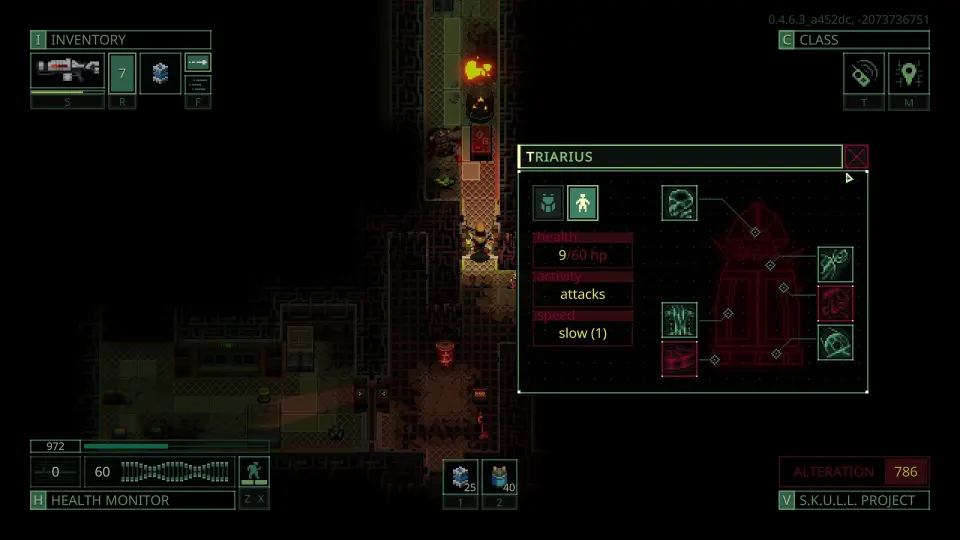
Check body slots and compatibility before committing rare hardware. Test a new plan with replaceable gear first, especially when a failed mission could cost the clone and its implants.
How to Plan Quasimorph Operator Builds
Quasimorph operator builds are easiest to improve one mission problem at a time. Do not rebuild every layer after one failure. Determine whether the loss came from positioning, insufficient resistance, the wrong damage type, poor supplies, or an unrealistic loot target.
Use this sequence before launching a contract:
- Choose an operator whose personal perk helps the mission.
- Pick a class that gains experience through expected actions.
- Select a primary weapon for expected armor and range.
- Pack an alternate damage type, melee tool, or throwable.
- Match armor to incoming damage without ruining mobility.
- Bring ammunition, food, treatment, and retreat reserves.
- Set an extraction threshold before collecting loot.
Mission difficulty is not always intuitive. Corporate strength, technology, enemy concentration, and floor count can make a lower-star contract feel harder than a higher-star mission. Threat spread across more floors may be easier to manage than concentrated danger on a short map.
As ship upgrades and clone improvements arrive, revisit your roster. Do not chase a permanent universal meta; keep the operator whose job, limits, and escape route you understand.
FAQ
What are the best quasimorph operator builds for beginners?
Start with a durable generalist such as Percy, a dependable firearm, protective armor, medical supplies, and an alternate damage option. Scouts of Hades is a practical early class for defensive firearm play.
Should I build Percy for melee or ranged combat?
Percy can do both. Start with a reliable gun and use melee as a controlled backup. His weight-based melee bonus is useful, but overloading him can compromise movement and survival.
Are implants worth using?
Yes, if they solve a meaningful weakness and fit the body-slot plan. Consider accuracy, detection, action economy, or mobility, then weigh the drawback against the risk of losing the clone.
Which class is best for melee operators?
Eclipse Blades is a natural melee choice because it rewards strikes, running, dodging, and inflicting wounds. Bring healing supplies and a backup ranged weapon.
How do I make a loot-focused operator survive?
Use Priya or another hauling-oriented operator with a compact, dependable combat kit. Reserve space for treatment and ammunition, decide when enough loot is enough, and extract before greed becomes a failed run.